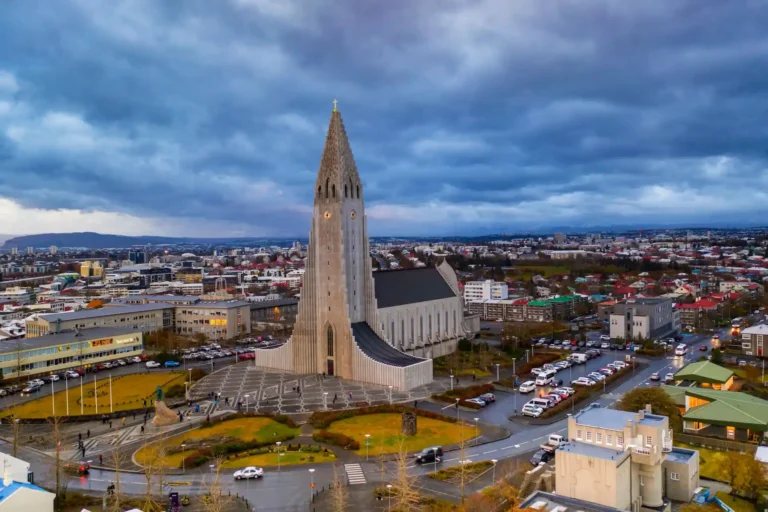
Hallgrímskirkja, located in the heart of Reykjavík, is one of Iceland’s most recognizable landmarks. Rising above the city skyline with its striking basalt-inspired architecture, the church is both a spiritual center and a symbol of Icelandic identity. Inspired by the country’s volcanic landscapes, glaciers, and black lava formations, it reflects the raw natural beauty found throughout Iceland.
Beyond its architectural significance, the surrounding Reykjavík area offers cozy Icelandic cuisine, small local markets, and a vibrant cultural scene that blends modern Nordic life with deep-rooted traditions.
Hallgrímskirkja Church – Reykjavík’s Towering Landmark
Hallgrímskirkja is the largest church in Iceland and one of the tallest structures in the country.
Its design was inspired by Iceland’s basalt lava flows, creating a unique stepped structure that resembles natural volcanic rock formations. The church tower offers panoramic views over Reykjavík, the Atlantic Ocean, and surrounding mountains, making it one of the best viewpoints in the city.
Visitors can take an elevator to the top and enjoy a full 360-degree view of Iceland’s capital, especially stunning during sunrise and sunset.
Leif Erikson Statue – A Tribute to Icelandic Heritage
Standing proudly in front of Hallgrímskirkja is the statue of Leif Erikson, the Norse explorer believed to be one of the first Europeans to reach North America.
The statue was a gift from the United States and has become an important cultural landmark in Reykjavík. It adds historical depth to the area, connecting Iceland’s modern capital with its Viking heritage.
Skólavörðustígur Street – Reykjavík’s Colorful Walking Route
Just a short walk from Hallgrímskirkja is Skólavörðustígur, one of Reykjavík’s most charming streets.
This colorful street is lined with cafés, art galleries, boutique shops, and local craft stores. It leads directly from the church down toward the city center, making it a popular walking route for visitors.
The street is especially lively during festivals and winter holidays, when lights and decorations bring warmth to the cold Icelandic air.
Icelandic Food – Warm Flavors in a Cold Landscape
The Reykjavík area around Hallgrímskirkja offers a unique food experience shaped by Iceland’s geography and climate.
Traditional dishes include lamb soup, Arctic char, cod, and hearty stews made with locally sourced ingredients. Many restaurants focus on simplicity and freshness, highlighting the natural flavors of Icelandic produce.
Dining in Reykjavík often feels cozy and comforting, especially after exploring the windy streets and cool northern air.
Traditional Icelandic Lamb Soup – A Local Favorite
One of the most popular dishes in Iceland is lamb soup, made with slow-cooked lamb, root vegetables, and herbs.
It is a staple comfort food, especially during cold months, and is widely available in cafés and restaurants near Hallgrímskirkja. Its warmth and richness make it a must-try for visitors exploring Reykjavík.
Reykjavík Street Food and Cafés
The area around Hallgrímskirkja is also known for its modern café culture and street food scene.
Visitors can enjoy Icelandic hot dogs, freshly baked pastries, skyr-based desserts, and locally roasted coffee. Small bakeries and cafés offer a perfect break between sightseeing stops.
The combination of traditional and modern food culture reflects Reykjavík’s evolving identity.
Reykjavík Flea Market – Kolaportið Experience
Not far from Hallgrímskirkja, the famous Kolaportið flea market offers a glimpse into local Icelandic life.
Here, visitors can find second-hand items, Icelandic snacks, dried fish, handmade goods, and unique souvenirs. It is one of the best places to experience local culture beyond the tourist areas.
The market is especially lively on weekends when locals and travelers gather to shop, eat, and explore.
Icelandic Wool and Handcrafted Souvenirs
Reykjavík is known for its high-quality wool products and handmade crafts.
Near Hallgrímskirkja, small shops sell traditional lopapeysa sweaters, wool scarves, lava jewelry, and Nordic-inspired home goods. These items reflect Iceland’s strong connection to nature and sustainable craftsmanship.
They make meaningful souvenirs that represent Icelandic heritage.
Harpa Concert Hall – Modern Architecture by the Sea
A short distance from Hallgrímskirkja is Harpa Concert Hall, another architectural highlight of Reykjavík.
With its glass façade inspired by Icelandic basalt structures and Northern Lights, Harpa hosts concerts, exhibitions, and cultural events throughout the year. It contrasts beautifully with the historic feel of Hallgrímskirkja, showing Reykjavík’s blend of tradition and modern design.
A Destination of Culture, Views, and Icelandic Identity
Hallgrímskirkja is more than a church—it is a gateway to Reykjavík’s culture, history, and lifestyle.
In a single visit, travelers can admire panoramic city views, explore nearby streets filled with art and cafés, taste traditional Icelandic food, and experience local markets that reflect everyday life in Iceland.
It is a place where architecture, culture, and community come together in one unforgettable setting.
Stay Connected While Exploring Iceland with Roam Pass eSIM
Whether you are navigating Reykjavík streets, capturing views from the church tower, visiting local markets, or exploring Iceland’s cultural landmarks, staying connected makes your journey smoother and more enjoyable.
With Roam Pass eSIM, you can enjoy fast and reliable mobile data across Iceland and Europe without physical SIM cards, roaming issues, or public Wi-Fi risks.
Simply activate your eSIM in minutes and stay connected throughout your Iceland adventure.